Rabat, 22 July 2026 – The Ministry of Economy and Finance, through the Blue Economy Development Programme Management Unit, organised the Blue Lab II, a major consultation milestone dedicated to finalising the National Blue Economy Strategy (NBES).
Bringing together the main ministerial departments, public institutions, representatives of the private sector, technical and financial partners, researchers and experts, the Blue Lab II marked a new stage of consultation on the National Blue Economy Strategy (NBES).

This meeting was held as part of the Programme-for-Results “Blue Economy Development in Morocco”, supported by the World Bank. Since its launch in 2022, this programme has made it possible to carry out an extensive process of assessments, studies, consultations and co-construction with a view to providing the Kingdom with an integrated national vision for the sustainable development of its maritime and coastal capital.

Far more than a presentation workshop, the Blue Lab II provided a forum for strategic dialogue, making it possible to share the consolidated version of the NBES, gather the stakeholders’ final recommendations and strengthen consensus around the directions that will guide public action over the coming years. This stage precedes the presentation of the strategy to the competent national governance bodies.

The result of more than four years of assessments, sectoral studies, foresight analyses, territorial consultations and participatory workshops, the National Blue Economy Strategy reflects a strong ambition: to make the ocean a driver of sustainable prosperity, competitiveness, sovereignty and resilience in support of the Kingdom’s development.
At the heart of this vision lies the concept of the Atlantic Ocean Economic Hub, which offers a new perspective on national maritime development. By building on Morocco’s Atlantic coastline, its port infrastructure, its coastal territories and its openness to Africa, Europe and the Americas, this vision aims to position the Kingdom as a leading international platform for trade, investment, innovation and blue economy value chains.
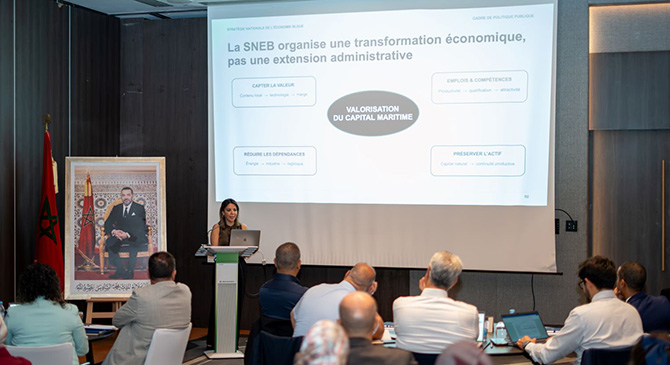
Discussions also focused on the five strategic pillars of the NBES, sectoral pathways for the 2030–2040 horizon, as well as Blue Finance, identified as an essential lever for accelerating the implementation of the strategy. The discussions highlighted the need to develop innovative financing mechanisms capable of mobilising greater public and private investment in support of a sustainable, competitive and value-creating blue economy.
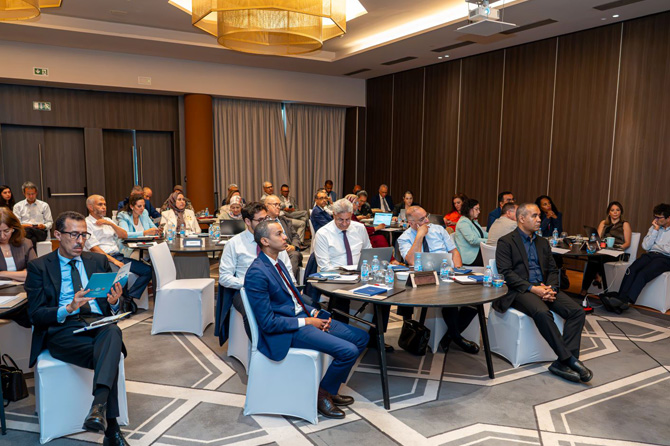
The participants unanimously commended the quality of the work accomplished and the collaborative approach adopted in developing the strategy.
The National Blue Economy Strategy is fully aligned with the directions of the New Development Model. It aims to harness a potential representing nearly 3.8% of national GDP and 4.6% of employment.
The recommendations made during the Blue Lab II will be incorporated into the final version of the strategy before its presentation to the Interministerial Commission for Blue Economy Development (ICBED), thereby paving the way for the implementation of a national ambition in support of sustainable growth, innovation, investment and the development of the Kingdom’s maritime potential.