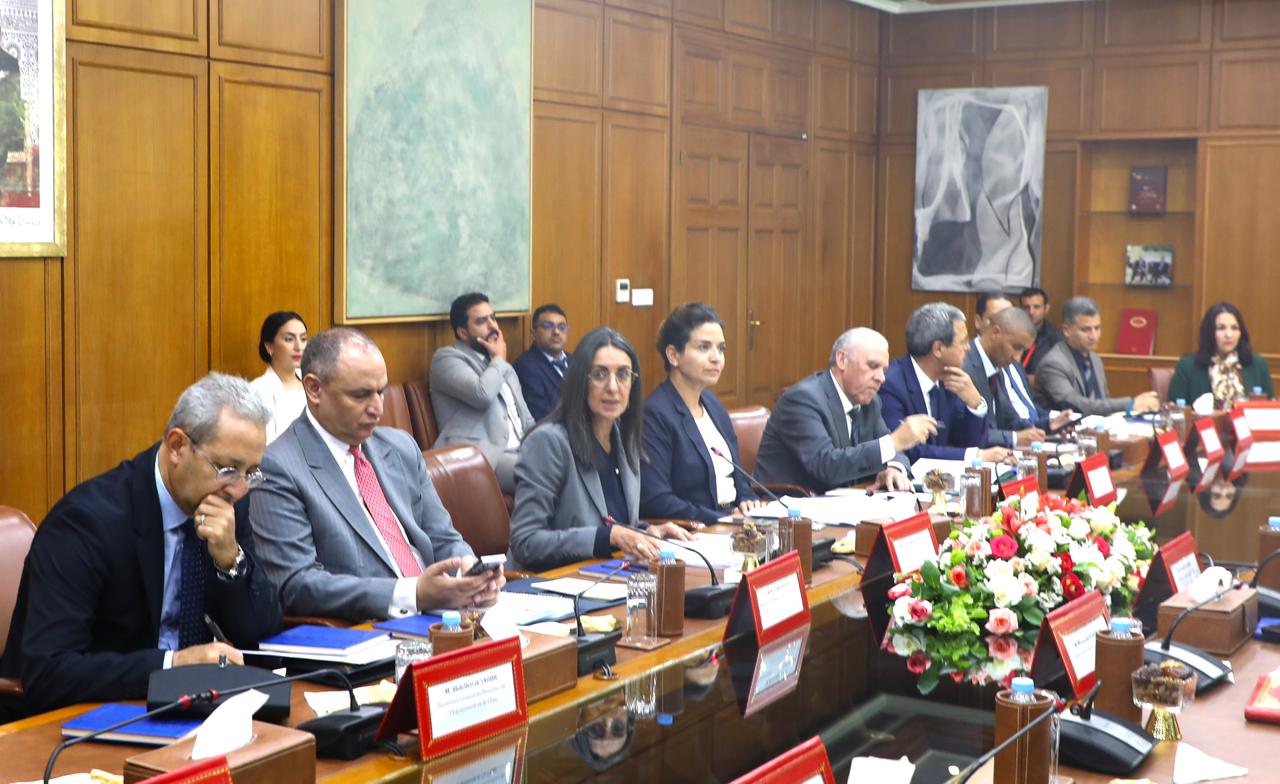
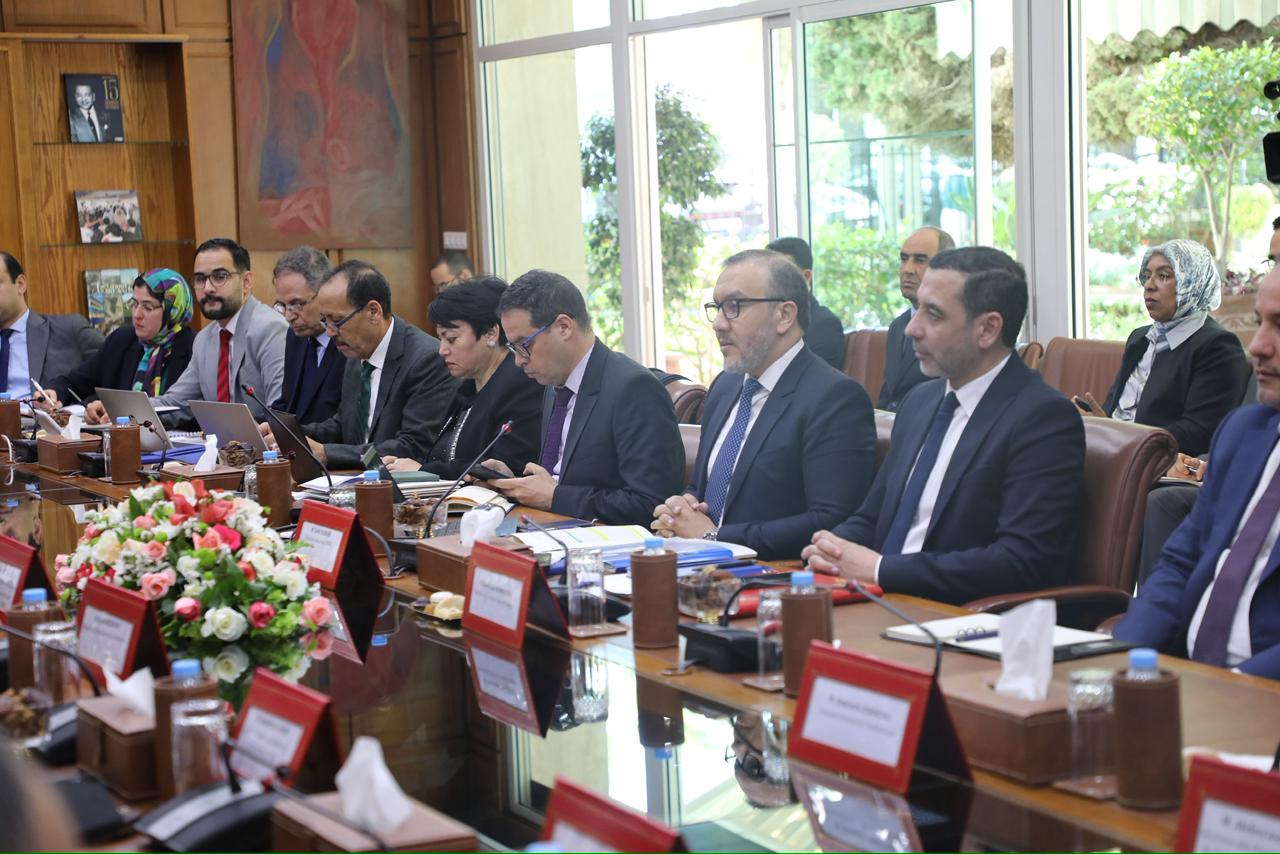
The 8th session of the Board of Directors of the National Office of Electricity and Drinking Water (ONEE) was held on Monday, April 21st in Rabat, under the chairmanship of the Minister of Economy and Finance, Mrs. Nadia FETTAH, acting on behalf of the Head of Government. The meeting was mainly dedicated to the approval of the 2025–2030 equipment plan, the Office’s action plans and budgets, as well as the review of performance and financial reports.
In her opening address, the Minister underlined the importance of this Council session, which takes place against a backdrop of major challenges linked to the energy transition and water stress. She praised the commendable efforts of ONEE and its teams to implement the High Royal Guidelines in the fields of energy, water and sustainable development. ONEE's Managing Director emphasized the profound changes taking place in the electricity and drinking water sectors. He underlined ONEE's mobilization to meet the challenges of water stress, rising demand and volatile fuel and raw material prices.
Mr. Tarik HAMANE stated that the Office’s action plans will be increasingly oriented towards supporting the decarbonization of the national economy and promoting private investment. At the same time, the Office has launched several strategic projects aimed at overhauling and sustaining its model, modernizing its management, and securing its management tools. Mr. HAMANE presented ONEE’s achievements for the 2022–2024 period, highlighting the execution of an investment program exceeding 22 billion dirhams, including 10.7 MMDH for electricity and 11.3 MMDH for drinking water and wastewater management.
These investments have increased the installed electrical capacity to 12 017 MW, of which 45.4% comes from renewable sources, bringing the country closer to its target of exceeding 52% by 2030. These accomplishments also enabled the provision of a total drinking water flow of 86.3 m³/s, raising rural access to drinking water to 98.8%, benefiting around 13.55 million inhabitants. In addition, seven new seawater desalination plants with a total capacity of 71.5 million m³/year were completed.
In 2024, the Office met the electricity demand, which reached 45 713 GWh, an increase of 3.9% compared to the previous year, with a consumption peak of 7 580 MW. As for drinking water, ONEE’s production reached 1.374 million m³ in 2024, including 934 million m³ from surface water, 374 million m³ from groundwater, and 66 million m³ from seawater desalination.
The Director General of ONEE then presented the 2025–2030 equipment plan, focused on developing and implementing projects to accelerate the energy transition through massive integration of renewable energies, development of appropriate storage and flexibility solutions, and reinforcement of the transmission and distribution network. This will allow renewable energy to account for 56% of installed capacity by the end of 2027
This equipment plan represents a total envelope of 177 MMDH for electricity and 43 MMDH for drinking water over the 2025–2030 period, with 72% of funding expected from the private sector. It includes a renewable electricity production capacity development program worth 100 MMDH, targeting 12,5 GW, representing 80% of the additional capacity planned for 2025–2030.
The implementation of this renewable energy (RE) program requires the anticipation of storage and flexibility solutions. This is through the development in 2026 of battery energy storage system (BESS) projects with a total capacity of 1 600 MWh, a program of natural gas-fired combustion engines with a capacity between 300 and 450 MW, as well as the El Wahda Gas Turbine Power Plant with a capacity of 990 MW, scheduled to be commissioned in early 2027. Regarding the drinking water sector, the equipment program for the next five years focuses on securing drinking water production, strengthening supply for rural areas, and optimizing the efficiency of existing production networks. At the end of this program, the desalination capacity planned in relation to drinking water needs is expected to reach 63% by 2030.
At the conclusion of these discussions, the Council approved all the resolutions submitted to it, which align with the Office’s objectives, both in terms of the development of ONEE’s activities and the improvement of its technical and managerial performance.
At the end of the meeting, Mrs. Nadia FETTAH renewed her thanks to the partners and ONEE teams. For his part, the Director General thanked the Chairwoman and members of the Board of Directors for their continued support, while reiterating his commitment to pursuing the Office’s ambitious development program.
The session was held in the presence of the members of the Board of Directors representing the relevant ministerial departments, the Director General of ANGSPE, the Director General of ONEE, and ONEE officials.