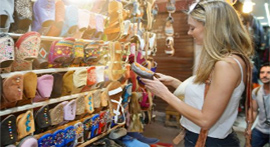
Indulging des courses à Marrakech could take up a fair share of your stay, as there are so many different products to buy and so many different places to shop. First comes the medina, a temple of local craftsmanship where buying is as much a matter of walking and browsing as it is of negotiating prices. Around the Jemaâ El Fna square, you can discover the hundreds of stalls selling local and foreign handicrafts. Take the time to enter the shop, accept the shopkeeper’s glass of tea and having a pleasant conversation. You will almost surely get out of this experience with a great item in your bag. This experience however authentic it may be, is not the only type of shopping the city has to offer. Marrakech has other treasures. You absolutely need to visit the district of Sidi Ghanem, the hot spot of concept stores and other showrooms, dedicated to both traditional “revamped” items and industrial furniture and decorative items. Sidi Ghanem is where artisanal genius meets the creativity of young Moroccan and foreign artists. If you prefer, you can also find regular, European-style stores around the neighborhood of Gueliz, both inside the mall on Mohammed V Avenue and in the shops in the adjacent streets.
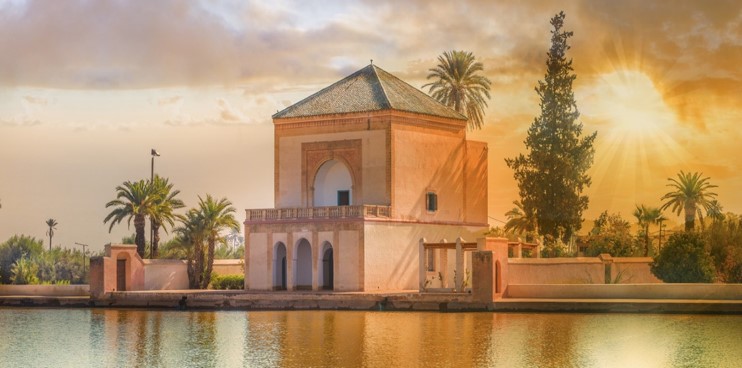
Marrakech, known as the “ochre city,” is Morocco’s leading tourist destination. With its 1,300,000 inhabitants, it is the fourth most populous city in the country. Endowed with an impressive cultural heritage with countless monuments and museums, the city is divided into two distinct parts: the new city and the medina or historic city, classified as a World Heritage Site by UNESCO since 1985.
Historic Marrakech
For a long time, Marrakech was a major political, economic and cultural center of the Muslim world, under the aegis of the various succeeding dynasties.
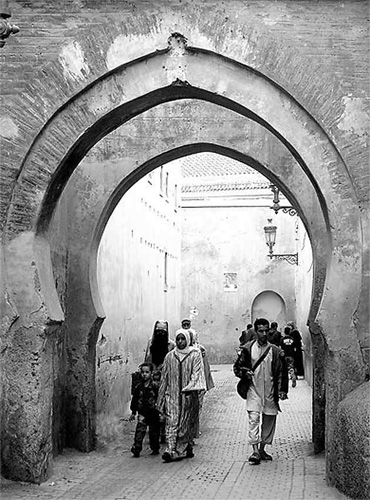
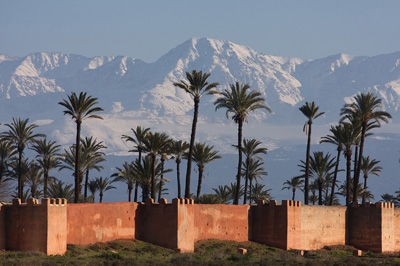
The city was founded in 1070 by Youssef Ibn Tachfin, first king of the Almoravid dynasty. In less than half a century, Marrakech became the capital of a vast empire stretching from Andalusia to the borders of Sudan. A great number of mosques and Koranic schools were built and ramparts erected to protect the city.
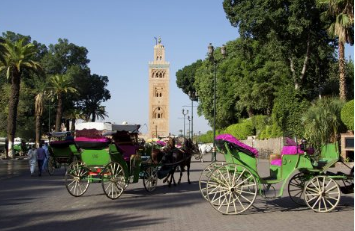
The Almohads then took over the city and built palaces and religious buildings such as the famous Koutoubia Mosque. At the end of the 13th century, Marrakech was conquered by the Merinid nomads and lost its initial role as a center of power and knowledge to the city of Fez, which became the capital.
At the beginning of the 16th century, Marrakech regained a central place by becoming the capital of the kingdom. The arrival of the Saadians was the symbol of the rebirth of the city. Among other major buildings, Sultan Ahmed El-Mansour had the El-Badii Palace built as a replica of the Alhambra of Andalusia, as well as the Saadian tombs.
At the end of the Saâdian dynasty, Marrakech sank into oblivion and much of its prestige and heritage fell into ruin. It was not until the reign of the Alaouites that the city regained its prestige with the restoration of the city walls, the Kasbah and the construction of new buildings and mosques. At the beginning of the 20th century, Marrakech was ruled by the Pasha Thami El Glaoui until the end of the protectorate. In 1956, the end of the protectorate and the return from exile of Mohamed V marked the end of the reign of El Glaoui.
Marrakech: Open and Festive
It is not by chance that Marrakech is the most visited city in Morocco. The city enjoys a worldwide reputation. The reasons are manifold. Probably contributing to its reputation is this so particular art of living, a mixture of authenticity and casualness, restraint and exuberance.
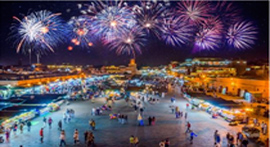
All year round, Marrakech resonates to the rhythm of the countless events of all kinds, both national and international, that take place in and around the city. Shows, concerts, festivals, exhibitions, conferences follow one another bringing together participants from all over the world.
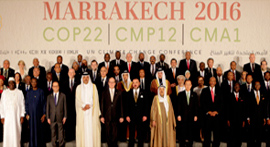
The largest international conferences are held there. The COP22 for climate brought together 30,000 people in Bab Ighli in 2016. The COP7 had also been held there in 2001. In 2014, the 5th edition of the GES (Global Entrepreneurship Summit) brought together 3000 participants at the same venue. The World Policy Conference ranked 3rd best think tank conference according to the University of Pennsylvania rankings, was held in Marrakech in 2009, 2010, 2017 and 2019. Created in 2005, the Global Clinton Initiative Middle East and Africa organized its 2015 edition there. In a more glamorous level, each year in November, Marrakech becomes the international capital of cinema, with the Marrakech Film Festival. The Marrakech Comedy Festival will celebrate its 10th anniversary this year. Lastly, in 2021, Marrakech will host the Annual Meetings of the World Bank and the IMF.
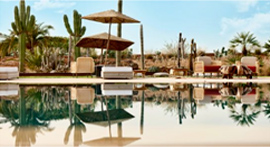
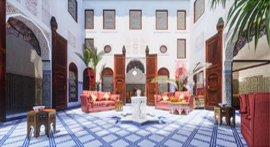
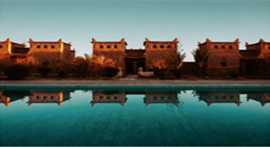
Marrakech is equipped with high-quality hotel infrastructures, capable of meeting the standards of a demanding international clientele. The ever-friendly staff prides itself in taking great care of its guests, combining kindness and professionalism. All the major international chains are present, alongside renowned Moroccan chains; for those who prefer the intimacy and authenticity of the residences in the medina, guest houses offer visitors a unique experience, sharing the life of the locals, the marrakchis, in the shady streets of the old town or on the sunny terraces. Just outside the city, towards the Atlas Mountains, you may also choose to discover Morocco in a way that is environmentally friendly and more sustainable by staying at an ecolodge. Nature offers its most beautiful and precious aspects: the purity and beauty of its landscapes.
But there’s a time for everything, and in the evening, it’s party time. The Jemaa El Fna square becomes a huge open-air restaurant where you can choose to have a taste of traditional popular dishes, such as snail soup with a hundred spices. If you prefer, you can also dine in one of the many restaurants in the city center, in the Gueliz or Hivernage, before having a drink at a trendy lounge bar or nightclub. In Marrakech, you can taste all the cuisines of the world, Moroccan, of course, but also French, Italian, Spanish, Chinese and, in recent years, Japanese; fusion cuisine has gained the trust and respect from all, particularly in the kitchens of the major Asian chains. A few hotel bars are renowned for their history, such as the Churchill bar of La Mamounia, once frequented by this famous figure character.
To see and to do
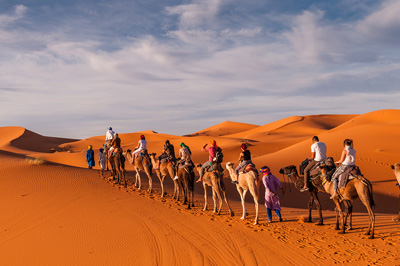
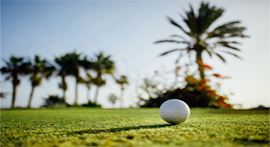
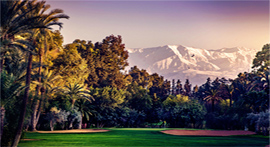
Let yourself be guided by your desires and vary the pleasures… Marrakech offers a wide choice of activities, including relaxation! Active people are able to play golf or go for a walk in the surroundings, in the desert or the mountains. History enthusiasts can visit the many monuments of the city, art aficionados can visit the galleries and museums, and why not do a bit of all that at the same time?
Marrakech has always attracted artists, both professionals and amateurs. It was not uncommon at the time to meet Churchill, his easel under his arm, in the gardens of the Mamounia that he was particularly fond of; later, Yves Saint Laurent would come to create his iconic outfits, now exhibited in the eponymous museum;
In Marrakech you can travel in the past and live in the present, between museums and contemporary art galleries.
Among the museums, at least ten are worth a visit:
- The Dar El Bacha Museum, in the heart of the medina;
- The Farid Belkahia museum named after one of post-colonial Morocco’s most distinguished modern artists;
- The Museum of Contemporary African Art Al Maaden, dedicated to African art;
- The Macma, (Museum of Art and Culture of Marrakech) created on the initiative of a gallery owner and collector, Nabil El Mallouki;
- The AMAN Museum for the Water Civilization in Morocco
- The Maison de la photographie in Marrakech, inviting its visitors to get to know Morocco better through an impressive collection of found photographs dating from 1879 to 1960;
- The museum of Marrakech, sheltered by a palace of the end of the 19th century;
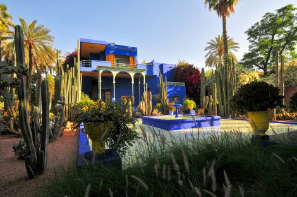
- The Berber Museum of the Majorelle Foundation;
- The Yves Saint Laurent Museum which houses a temporary exhibition room, a research library and a 140-seat auditorium;
- The Dar Si Saïd museum which exhibits sets of woodwork, jewelry, pottery and ceramics, weapons, carpets and weavings from the region.