Biography of speakers / panelists

Opening Ceremony
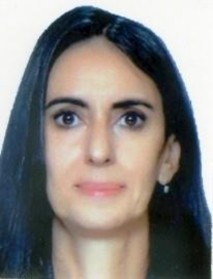
Hon. Nadia Fettah
Minister of Economy and Finance, Morocco and Chairperson of the African CaucusShe was appointed Minister of Economy and Finance in October 2021 and is the first woman appointed to this position in the Kingdom of Morocco.
Prior to this appointment, from 2019 to 2021, she served as Minister of Tourism, Handicrafts, Air Transport and Social Economy.
In 2017, Nadia Fettah was Chief Executive Manager of a group of companies in Africa before being appointed as Minister. She graduated from HEC Paris in 1994.
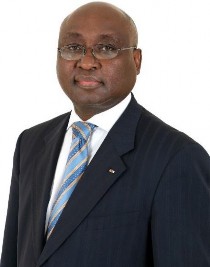
Dr. Donald KABERUKA
AU High Representative for Financing African Union Peace FundA Rwandan economist and former Finance Minister, Dr. Kaberuka is the7th President of the African Development Bank (2005-2015). He iscredited for expanding thereach and impact of AfDB, Africa’s premierfinancial institution during his two terms as President.
Kaberuka is currently the African Union High Representative forFinancing, the Peace Fund and COVID19 response. He is a member ofthe Board of Trustees of several organisations and think tanks includingthe Rockefeller Foundation, Center for Global Development, the MoIbrahim Foundation, The Brookings Institution and the London Schoolof Economics.
He serves on the International Advisory Council ofStandard Chartered Bank and Co-Chair of Council on State Fragility.
He was also nominated in 2017 to Chair the panel on the third External Evaluation of the International MonetaryFund. Since retiring from the African Development Bank, he is Chairman and Managing Partner of SouthBridge a financial and investment advisory firm which he co-founded. He was elected in 2019 as Chairof the Board of The Global Fund to Fight HIV/AIDS, TB and Malaria.
Financing African Development: Challenges in the Current Conjecture
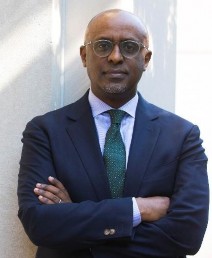
Abebe Aemro SELASSIE
Director of the African Department, IMFAbebe AemroSelassie is the Director of the African Department at theInternational Monetary Fund, a position he has held since 2016. In thiscapacity, Mr. Selassie oversees the IMF’s operations and engagementwith 45 countries across sub-Saharan Africa, spanning thethree mainpillars of IMF work—policy advice, lending operations, and technicalassistance. His responsibilities also include building strategicpartnerships and dialogue with senior policymakers and institutionsacross the region.
Before taking up hiscurrent position, Mr. Selassie gained extensiveexperience in a wide-ranging 22-year career at the IMF. He held various senior positions, including Deputy Director in the African Department, Mission Chief for Portugal and SouthAfrica, Division Chief of the African Department’s Regional Studies Division, and the IMF’s Senior ResidentRepresentative in Uganda. Earlier in his career, he worked on the Fund’s lending programs with Turkey,Thailand, Romania and Estonia as well as being deeply involved in policy,operational review, and economicresearch work.
Before joining the IMF in 1994, he worked for the Government of Ethiopia and the Economist IntelligenceUnit in London. Mr. Selassie is an Ethiopian national. He completed his graduate studies at the LondonSchool of Economics.
Repositioning Public Debt as a Catalyst for Economic Recovery andSustainable Growth
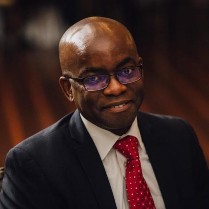
Samuel Munzele MAIMBO
Director, Development Finance Corporate IDA and IBRDSamuel Munzele Maimbois the Director of the IDA ResourceMobilization and IBRD Corporate Finance department at the WorldBank. In his role, he is responsible for the implementation of the WorldBank’s IDA’s hybrid financial model and policy analysis of IBRD incomeand corporate finance.
rior to this he was Senior Advisor in the Office of the Managing Directorand Chief Financial Officer. He has also worked on a diverse range of operations and countries and held various positions in the Finance Markets and Innovations Global Practice, including Financial Sector Specialist (South Asia Region, Africa Region and Europe and Central Asia Region); Practice Manager for Strategy and Operations; and Practice Manager for Long-Term Finance & Risk Management (Agriculture Finance & Insurance, Capital Market Development, Disaster Risk Finance, Housing Finance, Infrastructure Finance, Pensions & Insurance and Climate Finance).
Before joining the World Bank Bank, he was a Bank Inspector at the Bank of Zambia and an auditor at PWC. He holds a Ph.D. in Public Administration (Banking) from the University of Manchester, an MBA in Finance, (University of Nottingham), a BSc. in Accounting (Copperbelt University, Zambia) and is a Fellow Chartered Certified Accountant (FCCA, UK).
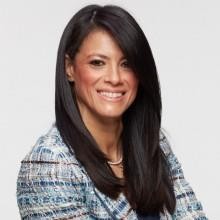
Hon. Dr. RaniaAL-MASHAT
Minister of International Cooperation of EgyptDr. Rania Al Mashat is Egypt’s Minister of International Cooperation since December 2019, and previously served as the country’s first female Minister of Tourism. Prior to that, she was Advisor to the Chief Economist of the International Monetary Fund (IMF) in Washington DC. She specialized in central banking issues and designing monetary policy frameworks. Her other former roles include serving as Sub- Governor for Monetary Policy at the Central Bank of Egypt, Senior Economist at the IMF, Deputy Project Director for the Institutional Reform and Informal Sector Center at the University of Maryland, College Park, USA, and Adjunct Professor of Economics at the American University in Cairo (AUC). Dr Al- Mashat has several publications on monetary policy, financial stability and institutional reforms in transition and emerging markets.
Dr. Al-Mashat represents Egypt as Governor in several international financial institutions, including the World Bank Group, European Bank for Reconstruction and Development, Arab Fund for Economic and Social Development, and Arab Bank for Economic Development, and as Alternate Governor of Egypt at the African Development Bank, Asian Infrastructure Investment Bank, and Islamic Development Bank. She is also Co-Chair of the MENA Stewardship Board at the World Economic Forum (WEF); and Member of the New Economy and Society Stewardship Board at WEF.
Dr. Al-Mashat received her PhD and MA in Economics from the University of Maryland, College Park, USA, and BA in Economics from AUC. She completed executive education at Kennedy School of Government, Harvard University and SaÏd Business School, Oxford University
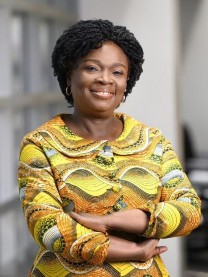
Ms. Victoria KWAKWA
Vice President for Eastern and Southern Africa, World BankVictoria Kwakwa, a Ghanaian national, is the Regional Vice President for Eastern and Southern Africa. An economist and development expert with over 30 years of experience, Dr. Kwakwa leads the Bank’s engagement with 26 countries that include low income, lower middle income and upper middle-income countries. She oversees an active portfolio of 313 operations totaling $58 billion and an extensive program of cutting-edge analytic work, technical assistance and policy advice. At the core of Ms. Kwakwa’s vision is a stable, integrated, and resilient region with dynamic economies and prosperous societies in which all citizens, notably women, children and youth enjoy equality of opportunity.
Under her leadership, the World Bank is providing vital support to countries as they face a series of complex, multifaceted challenges including the COVID-19 crisis, climate shocks, food- and energy-fueled inflation and rising debt levels. Her priorities include promoting private sector jobs and economic transformation, building human capital, strengthening climate resilience, agricultural productivity and food security, and improving access to critical infrastructure. Reducing the drivers of fragility and conflict, promoting gender equality and regional integration cut across all these areas of work.
Prior to her appointment on July 1, 2022, Dr. Kwakwa served as the Vice President for Corporate Strategic Initiatives, working closely with the World Bank Managing Director of Operations and other operational and corporate units on select high priority initiatives to enhance the World Bank’s operational delivery and impact. She also served as the Vice President for East Asia Pacific from April 2016 to August 2021, where she led the Bank’s engagement with 23 diverse clients ranging from countries on the cusp of high income, established middle income, to lower middle-income countries.
In addition to her work in the East Asia and Pacific region, Dr. Kwakwa has extensive work experience in Africa including in Nigeria where she led the Bank’s economic work between 2001 and 2006. She was also Country Manager for Rwanda from 2007 to 2009.
Dr. Kwakwa brings tothisrolea deep knowledge of Bank Group operations, and strong experience working on issues related to debt and macroeconomic resilience, reforms for economic competitiveness and growth, and fiscal decentralization. She has a track record of putting people at the center of her work, listening to beneficiaries, and striving for good outcomes for her clients and their citizens. Her work has spanned a wide range of development issues including rural development, infrastructure services provision and financing, climate resilience and mitigation, developing human capital, and leveraging the potential of urbanization for development. She has built enduring partnerships with private sector, civil society and other international actors and has demonstrated her ability to mobilize these diverse stakeholders behind shared interests.
Dr. Kwakwa began her career at the World Bank in 1989 as a Young Professional. She holds a bachelor’s degree in economics and statistics from the University of Ghana, and a master’s degree and PhD in economics from Queen’s University, Ontario, Canada.
Prof. Kevin Chika URAMA
Ag. Chief Economist and Vice President for Economic Governance & Knowledge Management, African Development BankKevin Chika URAMA, FAAS is currently the Acting ChiefEconomists/Vice President for Economic Governance & KnowledgeManagement, African Development Bank Group. He is also the SeniorDirector of the African Development Institute at the African DevelopmentBank Group, responsible for shaping and leading the bank-wide capacitydevelopment in the Regional Member Countries (RMCs) to accelerate delivery of the High 5 priorities of the Bank, the 2030 global SustainableDevelopment Goals (SDGs) and Agenda 2063.
Prof. Urama is an elected Fellow of the African Academy of Sciences (AAS); a Distinguished Professor of theUniversityof Nigeria; an Extra-Ordinary Professor in the School of Public Leadership, StellenboschUniversity, South Africa; an Adjunct Professor at the Sir Walter Murdoch School of Public Policy andInternational Affairs, Murdoch University, Western Australia; an Expert Partner of the Africa ProgressGroup Chaired by Former President Olusegun Obasanjo, and was Visiting Professor at the Department ofScience, Technology, Engineering and Public Policy, University College London. He is currently a memberof the GlobalCouncil on the UN Sustainable Development Goals (SDGs) for the term 2021 to 2023.
Prior tohis appointment as Senior Director of the African Development Institute, he was Senior Advisor to thePresident of the African Development Bank Group on Inclusive and Green Growth–Strategy, PolicyDevelopment, and Implementation. Kevin has held various executive leadership positions in the academia,international organizations, the private sector, and is currently in a multilateral development bank. Prior tojoiningthe African Development Bank, he was the inaugural Managing Director of the Quantum GlobalResearch Lab established in Zug, Switzerland; former Executive Director of the African Technology PolicyStudies Network (ATPS) established in Nairobi Kenya; Director of Research and Training of the ATPS;Senior Research Fellow at the Macaulay Land Use Research Institute established in Aberdeen, UnitedKingdom; Deputy Chairman of the OMFIF Economists Network, and inaugural President of the AfricanSociety for Ecological Economics (ASEE), and Lecturer at the University of Nigeria.
Kevin holds a Ph.D. in Land Economy from the University of Cambridge, United Kingdom; an MPhil in LandEconomy with a Distinction form Cambridge University; a Master of Science in Agricultural Economies fromUniversity of Nigeria, and a bachelor’s degree in Agricultural Economics with a First-Class Honors from theUniversity of Nigeria.
He won the 2002-2003 James Claydon Prize for the most outstanding Ph.D. thesis ineconomics or related fields at St. Edmund’s College, University of Cambridge. He was named the TechnologyExecutive of the Year by the Africa Technology Awards in 2012. He has published in various media and hasserved on / contributed to many international and inter-governmental scientific panels/reports including theIntergovernmental Panel for Climate Change (IPCC); Green Growth Best Practice (GGBP); the InternationalResource Panel (IRP); the OECD Green Growth and Poverty Reduction Task Team; the UNESCO GoverningBoard of the International Research and Training Centre for Science and Technology Strategy (CISTRAT), Beijing, China; and the Green Growth Knowledge Platform (GGKP) Advisory Committee; the High-LevelPanel on Global Assessment of Resources for implementing the StrategicPlan for Biodiversity 2011-2020;among others. He serves on various boards and global research committees to deliver inclusive green growthand sustainable development.
Rethinking the Global Financial Architecture
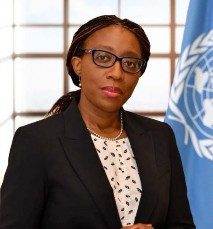
Ms. Vera SONGWE
UN Under-Secretary-General and Executive Secretary of the UNECAVera Songwe is the United Nations Under-Secretary-General and Executive Secretary of the Economic Commission for Africa (ECA). Upon her appointment, she became the first woman to lead the institution in its 60-year history.
As Executive Secretary, Songwe’s reforms have focused on developing and implementing “ideas for a prosperous Africa”. They have emphasized the critical importance of macroeconomic stability, innovative finance, private sector participation, the digital transformation, trade and competitiveness in fostering growth and improving livelihoods.
She was listed as one of Africa’s 50 most powerful women by Forbes in 2020 and named as one of the ‘100 Most Influential Africans’ by Jeune Afrique in 2019. In 2017, New African Magazine listed her as one of the ‘100 Most Influential Africans’ and the FT named her one of the ’25 African to watch’ in 2015. Songwe is acknowledged for her long-standing track record of providing policy advice and her wealth of experience in delivering development results for Africa. She has written extensively on development and economic issues including on debt, infrastructure development, fiscal and governance issues. She is well published and contributes to the development debate across a broad spectrum of platforms including in the Financial Times.
Prior to ECA, she held a number of senior leadership roles with the International Finance Corporation and World Bank.
Regional Integration
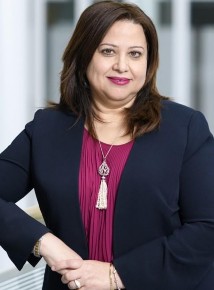
Boutheina GUERMAZI
World Bank Director for Regional Integration forSub-SaharanAfrica, the Middle East and Northern AfricaMs. Guermazi, a Tunisian national, joined the Bank in 2004 as aRegulatory Specialist.She has since held several positions ofresponsibility in the Information and Communication Technologies(ICT)teams, including Practice Manager for the Digital Developmentteams covering the Middle East and Africa Regions, and World BankDirector for Digital Development. In this position (2018-2021), she leda global team that worked on building digital economiesin developingcountries to drive shared prosperity and reduce poverty. She became theWorld Bank Director for Regional Integration for Sub-Saharan Africa,the Middle East and North Africa since October 18, 2021. In thisposition she oversees the implementation of the World Bank Group’s regional integration strategy and leads the policy dialogue andpartnership with regional organizations, country clients, and partners.
Ms. Guermazi holds a Ph.D. in Telecommunications Law and Policy from the Faculty of Lawat McGillUniversity, Canada; an L.L.M. in International Law from Indiana University, USA; and a bachelor’s degreein Public Law from the University of Tunis, Tunisia. She held a Fulbright Scholarship and was a researchscholar at the University of Michigan (USA), the Social Science Research Council (USA), and the Center ofStudies for Regulated Industries (Canada).
Professor Daniel Ona ONDO
President of the Communauté Economique des Etats de l’Afrique Centrale (CEMAC)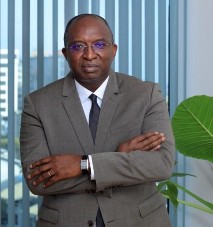
Cheick-Oumar SYLLA
IFC Director, North AfricaCheick Oumar Sylla serves as IFC’s Director for North Africa based in Cairo, Egypt. He covers Egypt, Libya, Algeria, Tunisia and Morocco.
Before joining IFC in Dakar in May 2017 as Principal Investment Officer- Africa Infrastructure and Natural Resources, Cheick-Oumar held leadership positions in a range of different industries in Africa and Europe, including in the pharmaceutical, real estate, banking and energy sectors, and was instrumental in creating a number of successful business ventures. Most recently, he served as Executive Vice President, Business Development Africa at ContourGlobal.
Prior joining ContourGlobal, Cheick-Oumar was Director of the Investment & Financing Department at ICD, the Islamic Corporation for the Development of the Private Sector, a member of the Islamic Development Bank (IDB) based in Jeddah, Saudi Arabia. Cheick-Oumar also served as general manager of Pharmafinance (Ubipharm Group), one of the leading pharmaceutical distribution companies in Africa, and also as Chief Business Development Officer at Teylioum Group in Geneva, Switzerland.
In July 2019, Cheick-Oumar became IFC’s Country Manager for the Horn of Africa covering Ethiopia, Eritrea, Djibouti, Sudan and South Sudan. He was based in Addis Ababa, Ethiopia. In this last position and despite the challenges, Cheick-Oumar succeeded in increasing IFC’s footprint and growing IFC’s pipeline in the region.
Cheick-Oumar is a graduate of École des Hautes Études Commerciales (HEC) in Montréal, Canada. He is also a member of the Institute of Directors (IoD).
Mr. Abdessamad SAIDI
Director Research Department Bank Al-Maghrib, MoroccoAbdessamad Saidi est responsable du Départementde la Recherche à Bank Al Maghrib. Avantde rejoindre la Banque centrale en 2009, il a travaillé en tant qu’expert en gestion quantitativechez Standard Life Investissements à Montréal. Il a également assuré plusieurs chargesd’enseignements à l’Université de Montréal et à Concordia University. Il est titulaire d’une thèsede doctorat en statistique soutenue en 2003 à l’Université Libre de Bruxelles. Il apubliéplusieurs articles dans des revues internationales dans le domaine de l’économétrie. Sesdomaines de recherche relèvent de l’économie monétaire et financière.
Climate Crisis
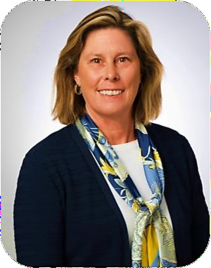
Ms. Jennifer SARA
Global Director for Climate Change, World Bank GroupJennifer Sara is the Global Director for the World Bank Group’s ClimateChange GlobalPractice from July 1, 2022. Ms. Sara is responsible foroverseeing the key strategic priorities and implementation of the WorldBank Group’s Climate Change Action Plan and lead five Practice groupson: Climate Operationalization and Impact, Climate Economics andFinance, Climate Funds Management, Climate Investment FundsSecretariat, and Strategy, Knowledge and Outreach.
Prior to taking on this position, Ms. Sara served for eight years asDirector and Global Director for the Water Global Practice, overseeingthe Bank’s $30B water portfolio, analytics, trust fund management and knowledge agenda. She has worked on infrastructure and sustainabledevelopment issues for the World Bank for more than thirty years in the following assignments: SectorManager for Sustainable Development based in Vietnam; Sector Leader for Infrastructure in Brazil; LeadInfrastructure Specialist for Latin America, Senior Water and Sanitation Specialist for West Africa, andWater and Sanitation Specialist in Bolivia. Prior to joining the Bank, Ms Sara worked in Liberia and for theUS Indian Health service.
Ms. Sara holds an MSc in Environmental Management from the University of London and a BSc inEnvironmental Engineering from Brown University.
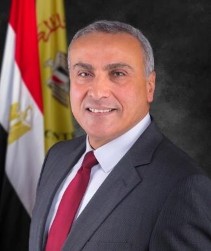
H.E Mr. Gamal Mohamed AbdelAziz NEGM
Ag Governor, Central Bank of EgyptMr. Gamal Negm is the Deputy Governor of the Central Bank of Egypt,in charge of Banking Stability since November 2011. Hisresponsibilities incorporate the supervision of various sectors withinthe Central Bank of Egypt, among which; the Onsite & Offsitesupervision, Licensing, Macro-Prudential, Regulations, RiskManagement Reform and Large Corporates, Basel, Print-house, CyberSecurity, Central Risk Management and Information Security, Security,Legal affairs, Internal Audit and Finance, in addition to Exchange andmoney transfer companies, The Egyptian Credit Bureau (I-score) andthe Credit Guarantee Company (CGC).
Owing to his vast and distinguished banking experience, Mr. Gamal also holds the positions of Non-Executive Chairman of the Credit Guarantee Company (CGC), and a board member in the FinancialRegulatory Authority (FRA), as well as a member in the Board of Trustees of the Egyptian MoneyLaundering and Terrorist Financing Combating Unit (EMLCU), a Deputy Chairman for the Board of theEgyptian Banking Institute, besides being a member in the General Assembly of the Egyptian HoldingCompany for Airports and Air Navigation.
Mr. Gamal’s duties and responsibilities are not limited to the local level, but also extend to the internationallevel, as he is a member of the Financial Stability Board Regional Consultative Group for the Middle Eastand North Africa, in addition to being appointed in the position of a non-executive Board Member and Headof Strategy and Risk Committee in the African Export and Import Bank (Afreximbank).
From February 2008 till November 2011, Mr. Negm held the position of Sub-Governor for the BankingSupervision within the Central Bank of Egypt. Prior to that, he was the assistant Sub-Governor of the on-site banking inspection since 2006, in charge of the complete overhaul and revamp of the onsite examinationprocess, policies, procedures and manuals shifting from compliance-based supervisory approach to a risk-based approach.
From thedate of joining the Central Bank of Egypt in July 2004 until 2007, Mr. Gamal was responsible forthe “Banking Reform Program”, whereas he successfully executed the first banking reform plan for theEgyptian Banking Sector, namely; addressing the issue of non-performing loans (NPLs), Financial &Managerial restructuring of state-owned banks, and Upgrading the CBE’s Banking Supervision Sector.
Before joining the Central Bank of Egypt, his successful career span over 25 years of experience in theBanking sector, pertaining Senior Management positions in a number of international and local bankinginstitutions, while acquiring vast experience in Risk Management, Credit Control, Internal Audit, andFinancial Control areas.

Ms. Emilia JURZYK
Deputy Unit Chief /Climate Expert IMFEmilia Jurzyk, Polish national, joined the Fund in 2008. During hertime at the IMF, Emilia served as a mission chief for Tuvalu andworked in the Office of the Managing Director of the IMF. She alsoworked on the performance of state-owned enterprises, inequality,household debt, and credit developments. In 2021, she joined theStrategy, Policy and Review Department as a Deputy Unit Chief in theDevelopment Issues Unit, which is responsible for coordinating theIMF’swork on climate change. Emilia holds a PhD in economics fromthe KU Leuven in Belgium.
Addressing the Impact of Climate on Food Security
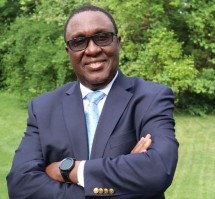
Simeon EHUI
Regional Director for Sustainable Development, Africa West, WorldBankSimeon Ehuia national of Cote d’Ivoire, has been since July 1, 2019,the World Bank’s Regional Director for Sustainable Development forAfrica and more recently since July 1, 2020, Regional Director for Westand Central Africa covering agriculture, environment, social, water,urban and climate. His main responsibility, among other things, is toprovide vision, coherence, and focus for sustainable development in West and Central Africa consistent with the regional/countrystrategies.
Before his current assignment, Simeon was Director of the World Bank’s Food and Agriculture GlobalPractice (2017-2019). Since joining the World Bank in 2003, Simeon has held several assignments. He wasmanager of the Food and Agriculture Global Practice for Africa (2015-2017) and SouthAsia (2009-2015).He also served as Lead Economist and Sector Leader for the Sustainable Development Network in Nigeriacovering a variety of sectors such as agriculture, environment, transport, and energy.
Before joining the World Bank, Simeonworked for 15 years in the Consultative Group on InternationalAgricultural Research (CGIAR). He managed multi-country agricultural research development programsin Africa and Asia for both the International Institute of Tropical Agriculture (IITA) and theInternationalLivestock Research Institute (ILRI).
Simeon holds a Masters (1983) and Ph.D. (1987). in Agricultural Economics from Purdue University, inIndiana, USA, and has published extensively in his field. He also holds a Masters (1981) and Bachelors(1980) in Economics from the National University of Cote d’Ivoire Simeon is an honorary fellow of theAfrican Agricultural Economist Association, and a Distinguished Agricultural Alumnus of PurdueUniversity.